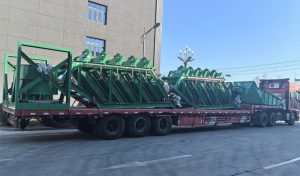
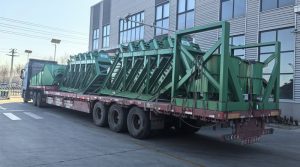
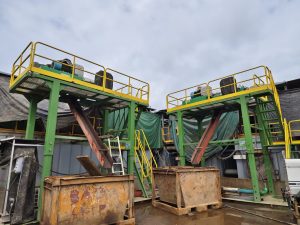
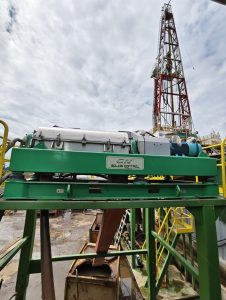
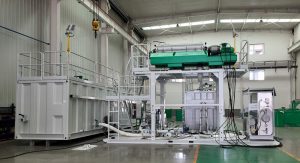
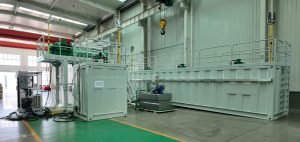
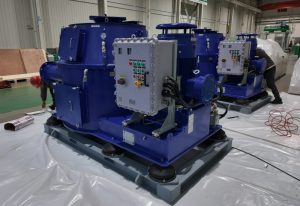
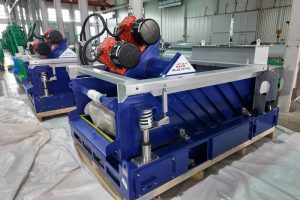
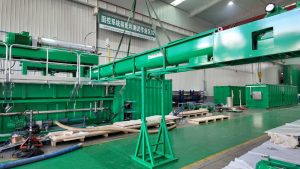
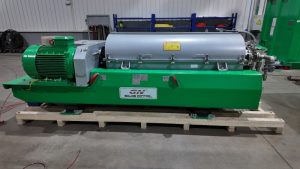
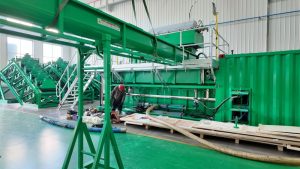
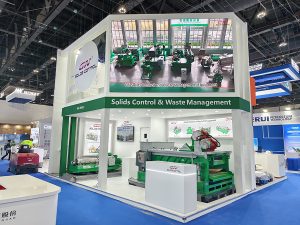
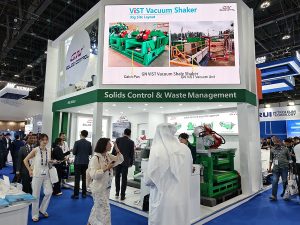
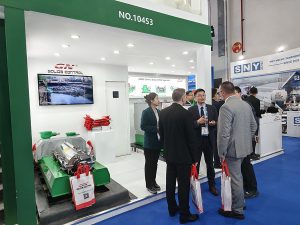
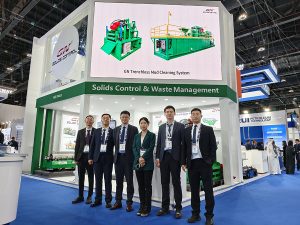
One batch of Mining Vibrating Screens refers to a coordinated system of vibration-based equipment designed to process material within a defined operational cycle. This system integrates specialized machines for feeding, screening, and dewatering to form a continuous, efficient workflow. The primary function is to use controlled mechanical vibration to separate, convey, and treat bulk materials, thereby enhancing throughput and operational reliability in mining and aggregate processing.
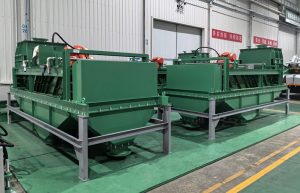
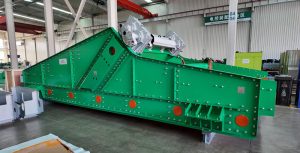
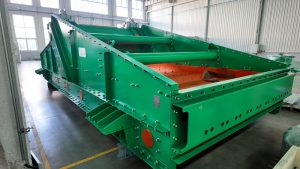
In such a batch, specific equipment is selected and configured to perform sequential tasks. For instance, a vibrating feeder supplies raw material at a controlled rate to the primary processing stage. Following this, screening equipment classifies the material by particle size. A key technological advancement in this area is the use of high-frequency fine screens to replace traditional trommel screens for scalping applications. The single-deck high-frequency fine screen model GNFG1232 exemplifies this shift. It is engineered for efficient removal of oversize debris and is equipped with an under-screen collection chute to gather the screened fines, ensuring a clean separation and minimizing material loss. This design is particularly effective for handling sticky or damp materials where traditional rotary screens might experience blinding or reduced efficiency.
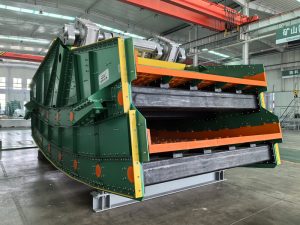
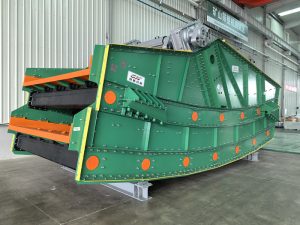
After the initial screening, material often requires further processing to reduce moisture content. This is where dewatering screens are critical. In a large-scale setup, a linear motion screen like the model GNLSZ3061 is employed for dewatering. This large linear screen uses a dual-vibrator motor configuration to generate a linear vibrating force. This motion propels the material across the screen surface while allowing water to drain through the screen panels. The GNLSZ3061 is designed for high-capacity dewatering of sand, tailings, or other slurry-type materials, producing a drier product for subsequent handling or disposal.
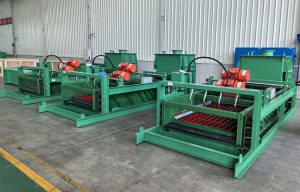
The integration of these devices into a single batch relies on precise engineering. Each machine’s operational parameters—such as vibration frequency, amplitude, and screen angle—must be harmonized based on the processed material’s characteristics, including density, particle size distribution, and moisture level. For example, the high-frequency, low-amplitude action of the GNFG1232 fine screen is optimal for precise separation of fine particles, while the robust, long-stroke linear motion of the GNLSZ3061 is suited for conveying and draining heavier, wetter loads. The system’s efficiency depends on this parametric matching to ensure smooth material transfer between stages without bottlenecks or overflow.
Structurally, these vibrating machines are built for durability in harsh environments. Frames are typically constructed from heavy-duty steel to withstand constant dynamic loads. Critical wear parts, such as screen panels, use advanced materials. Polyurethane or rubber screen surfaces are common for their abrasion resistance and ability to dampen noise. The GNFG1232’s fine screen deck and the GNLSZ3061’s dewatering panels would utilize such materials to extend service life and maintain screening accuracy. Furthermore, the drive system is fundamental. Most modern units employ externally mounted vibration motors with adjustable eccentric weights. This allows for fine-tuning the vibratory action to suit different materials without major mechanical changes.
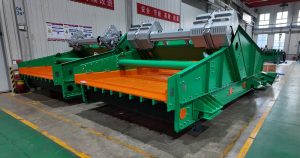
The control and support systems are integral to a functional batch. Vibration isolation mounts are installed to prevent the transmission of oscillatory forces to the plant’s foundational structure, protecting infrastructure and reducing noise. Increasingly, these systems incorporate programmable logic controllers for automation. Operators can monitor performance metrics like motor current, vibration amplitude, and feed rate, making adjustments remotely to optimize the batch process for changing feed conditions or desired product specifications.
The transition from traditional methods, like trommel screens, to advanced vibrating screens such as the GNFG1232 offers measurable benefits. It typically results in higher screening efficiency, greater throughput per unit area, reduced maintenance due to fewer moving parts, and improved separation accuracy. Similarly, using a dedicated, high-capacity linear dewatering screen like the GNLSZ3061 ensures more effective moisture removal compared to simpler draining methods, yielding a product that is easier and cheaper to transport.
In conclusion, one batch of mining vibrating equipment represents a systematic approach to materials processing. By integrating purpose-built machines like the high-frequency fine screen GNFG1232 for precise scalping and the large linear screen GNLSZ3061 for efficient dewatering, operations can achieve a continuous, automated, and highly effective processing cycle. The success of this batch hinges on correct equipment selection, parametric synchronization, robust construction, and intelligent control, all aimed at maximizing productivity and reliability in mineral and aggregate handling.